
Doomfist’s Rollercoaster: Overwatch 2 Mid-Season Patch Unleashes Another Set of Nerfs
Overwatch 2 Doomfist nerfs and Ramattra buffs shake up the meta, leaving tank mains to adapt to dramatic mid-season balance changes.
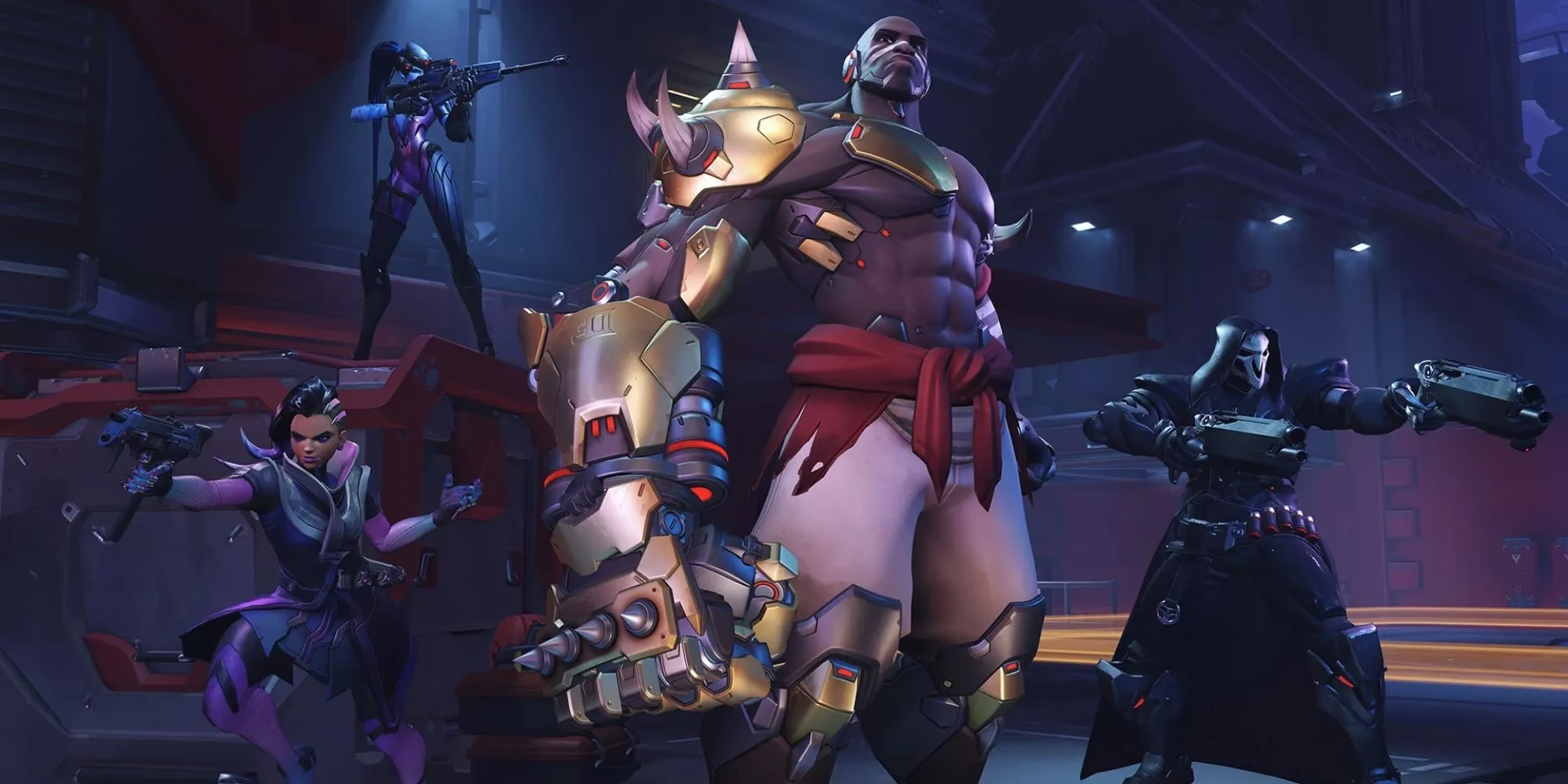
In the ever-shifting landscape of Overwatch 2, no hero has endured a more turbulent journey than the Talon leader himself. Just when Doomfist mains thought they could breathe again—following a brief but glorious surge in viability earlier this month—the developers dropped a mid-season balance patch that sent seismic waves through the player base. The message was clear and brutal: back to the shadows, Doomfist, your time in the spotlight is over.
The patch, which went live on a quiet Tuesday evening in summer 2026, undid nearly every buff the gauntlet-wielding tank had received only days before. It felt less like a routine tune-up and more like an orchestrated rollback, leaving many to wonder what had triggered such a swift change of heart. Observers pointed to an alarming trend in the top ranks, where Doomfist was reportedly tearing through backlines with the finesse of a DPS assassin rather than absorbing pressure like a true frontline anchor. The developers, it seems, decided they had seen enough.
Right from the opening lines of the patch notes, the adjustments were unmistakably harsh. Rocket Punch, the ability that defines Doomfist’s identity, saw its cooldown extended back to a sluggish four seconds—identical to its value from a season many wish to forget. This single change drastically reduced his mobility uptime, transforming him from a whirling dervish of displacement into a far more predictable and punishable presence.
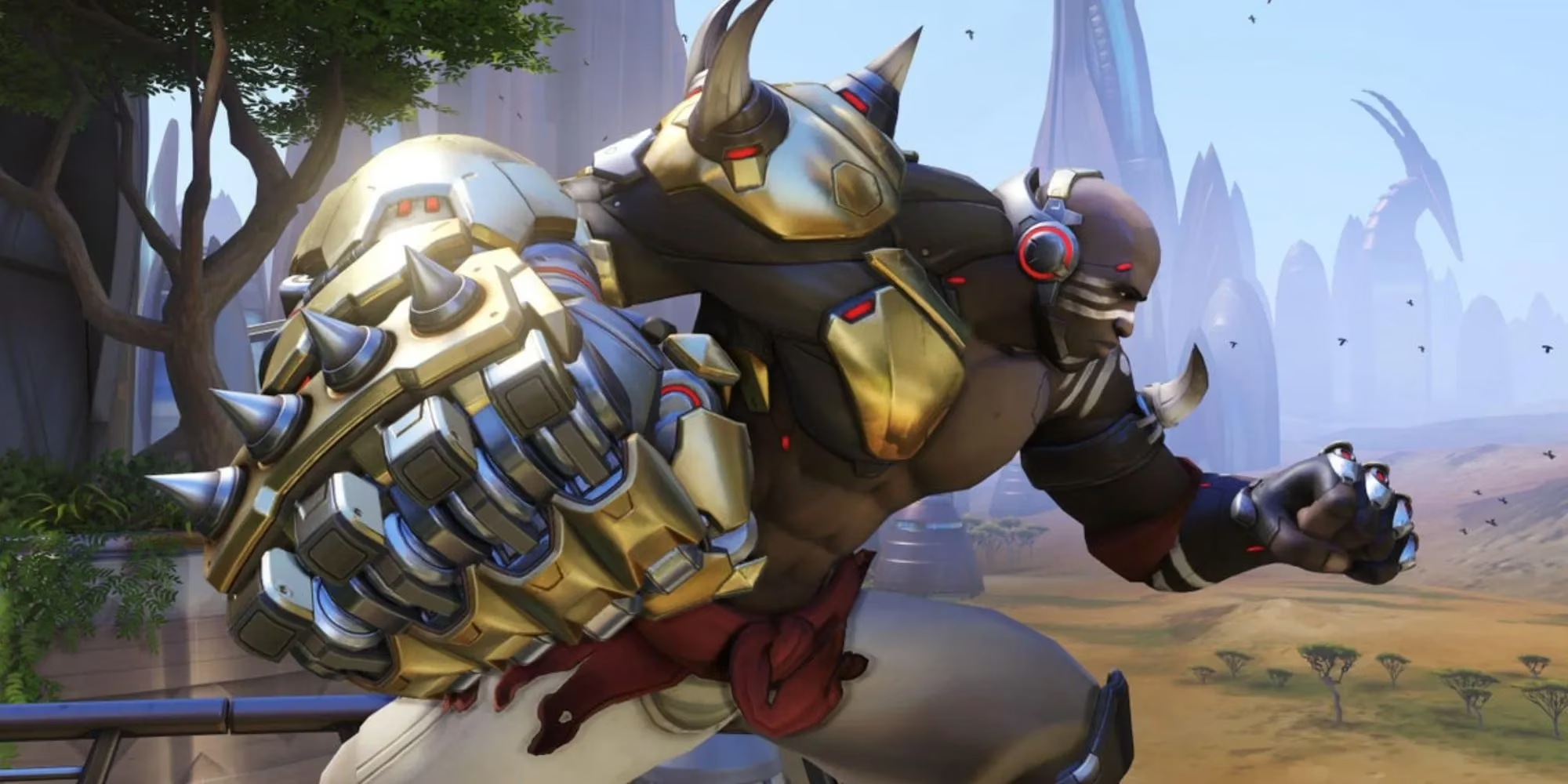
If the Rocket Punch nerf stung, the rework to Power Block twisted the knife. The damage required to empower his punch surged from 80 to 100 points, a seemingly minor numerical hike that in practice meant Doomfist had to stand in the heart of enemy fire for even longer, absorbing punishment just to unlock his full potential. In a game where split-second positioning can mean life or death, this change felt almost cruel, especially considering Power Block was already considered one of the clunkiest defensive tools in the tank roster. To make matters worse, his passive ability “The Best Defense…” was also trimmed, granting only 35 points of temporary overhealth per ability hit instead of the previous 40. Together, these cumulative reductions turned the once-flexible brawler into a glass cannon without enough gunpowder.
While Doomfist’s devotees mourned the loss of their favorite’s fleeting dominance, other corners of the hero gallery celebrated unexpected fortunes. Ramattra, the omnic monk who shifts between serene support and rampaging brute, received a sweeping set of buffs that made him an absolute terror in close-quarters skirmishes. His Nemesis Form movement speed climbed by 20%, a boost that allowed him to hunt down fleeing squishies with terrifying efficiency. The armor bonus in the same form ballooned from 150 to 225, making him an even thicker wall of violence. To round it off, the cooldown of his Void Barrier in Omnic Form dropped by two seconds, granting his team stronger protection at a faster pace. Ramattra players, long accustomed to a niche existence, suddenly found themselves in the meta’s warm embrace.
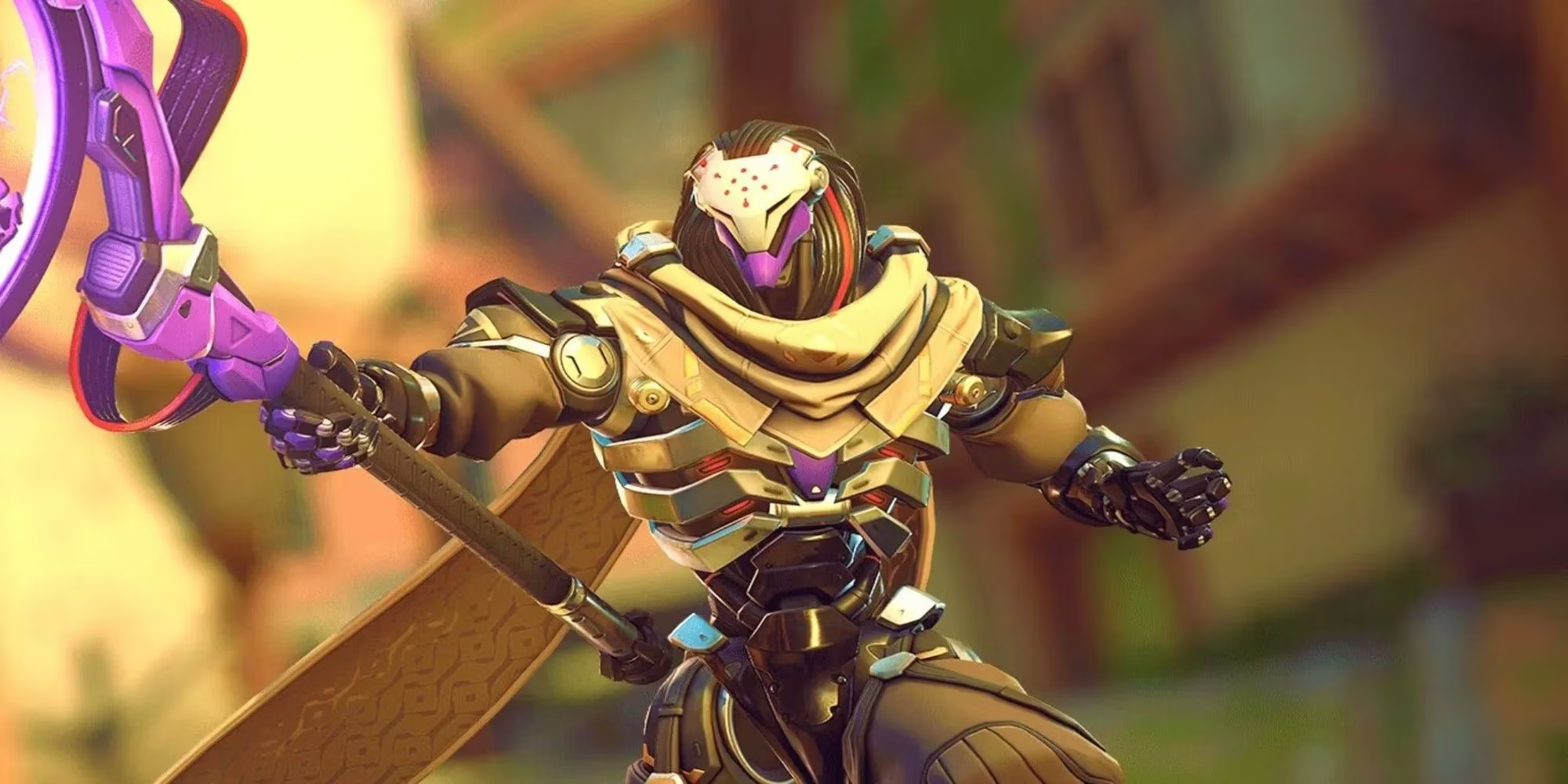
Orisa also stepped further into the limelight with meaningful refinements. Her ultimate, Terra Surge, now pierces through barriers upon impact—a change that punishes Reinhardt and Winston players who rely on shields to save their teammates from the gravitational pull. Moreover, her Augmented Fusion Driver enjoyed an extended damage falloff range, pushing from 15 to 25 meters. This allowed her to apply pressure from safer distances, blurring the line between a stationary anchor and a mid-range harasser.
These robust tank buffs highlighted a subtle yet profound shift in design philosophy. While Doomfist was being hammered back into a strict, block-heavy playstyle, Ramattra and Orisa were being handed tools to thrive in their defined roles. It was as if the developers were redrawing the boundaries of what a tank should be, and Doomfist’s recent escapades as a pseudo-DPS had crossed a forbidden line.
Not all adjustments leaned positive, however. Kiriko’s protective suzu saw its invulnerability window clipped to a razor-thin 0.85 seconds, demanding greater precision from support players. Sojourn underwent a dramatic rework: her Disruptor Shot lost its slow effect entirely, stripping away some of her area denial capability, but in exchange her primary fire spread increased by 28%, turning her into a more consistent mid-range threat whose bullets could more easily find heads. Tracer received minor tweaks that went unnoticed amidst the larger uproar, while Ana’s Biotic Rifle damage and healing both nudged upward to 75, and her Biotic Grenade duration extended to four seconds, reinforcing her position as a linchpin in burst healing compositions.
The community’s reaction was a cacophony of frustration, laughter, and gritty determination. Doomfist mains flooded forums with memes depicting their hero wrapped in bandages, sarcastically thanking the developers for keeping their expectations in check. Yet beneath the humor simmered a genuine debate: was Doomfist’s core problem a numbers issue, or did his very kit invite endless cycles of buff-and-nerf chaos? Analysts noted that the hero’s design—high mobility, burst damage, and a reliance on brief windows of empowerment—naturally tempted players to forego traditional tanking for flanking shenanigans. Unless that fundamental tension was addressed, patches like this would remain a recurring nightmare.
Still, competitive ladders adapted with characteristic speed. Tank players swiftly migrated to Ramattra and Orisa, reshaping the frontlines they built. Strategies that once crumpled under Doomfist’s relentless pressure suddenly reemerged, and backlines breathed easier knowing the nightmare fist wouldn’t crash through walls as frequently. The mid-season shake-up once again proved that Overwatch 2’s living meta was a fickle beast, capable of elevating heroes from obscurity to godhood and back again in the span of a week.
For those who wear the gauntlet, however, hope was not entirely lost. Doomfist had weathered storms before, and true masters of the Talon founder knew that adversity only sharpened their skills. They would dive back into the training range, recalibrate their timing, and find new ways to make the enemy fear the sound of charging knuckles. After all, in a world where balance patches are as unpredictable as a Pharah rocket, the only constant is the will to adapt.
As players continue to adapt to the shifting dynamics of Overwatch 2, many take solace in the broader gaming community's resilience and creativity in overcoming challenges. Whether it's discovering new strategies or optimizing playstyles, gamers are always on the lookout for tools that enhance their experience. For those looking to upgrade their gaming setup or find the best deals on games, tools like a steam deal finder can be invaluable. This resource helps players uncover discounts and special offers, ensuring they have access to the latest titles without breaking the bank.
In the ever-evolving landscape of video games, staying informed about the best deals is just as crucial as mastering the mechanics of a hero like Doomfist. Platforms like DealNest provide a streamlined way to access game discounts, allowing players to spend more time perfecting their skills and less time worrying about their budget. As the community eagerly awaits the next big patch or hero adjustment, having a reliable source for game deals can be a game-changer in maintaining a competitive edge.
Leave a Comment