
How Overwatch 2's Push Mode Evolved from Frustrating to Fantastic
Overwatch 2's Push mode received a transformative Season 4 overhaul with map trimming, robot speed boost, and dynamic forward spawns.
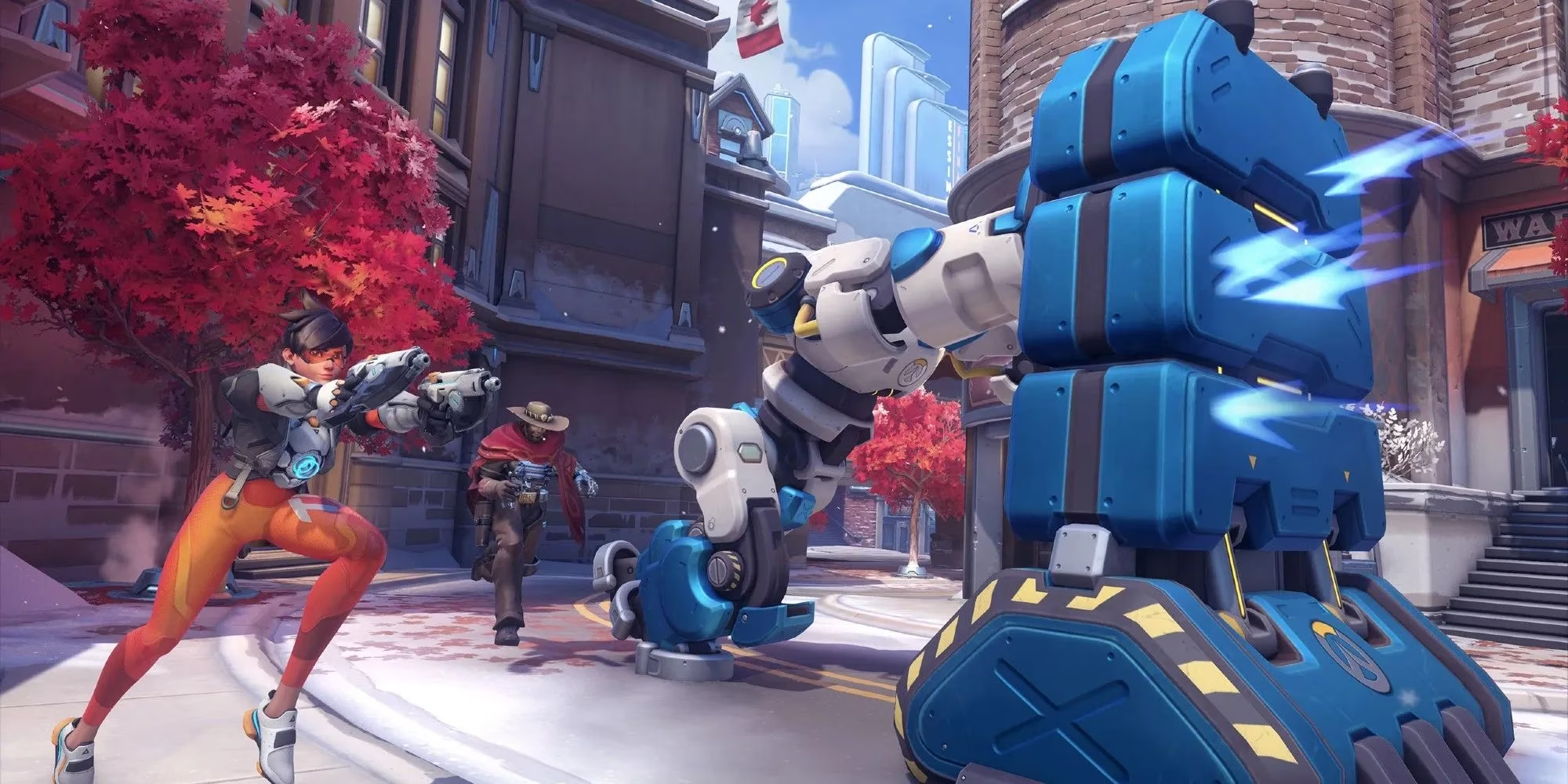
I still remember the chaos when Overwatch 2 launched back in October 2022. The hype was real, especially with the promise of a brand-new core mode—Push. Replacing the controversial Assault maps (RIP Hanamura and Horizon Lunar Colony) with something fresh sounded like a dream. But if you were around back then, you know it wasn't all sunshine. As a professional game player, I saw firsthand how the community initially recoiled. The biggest complaint? These Push maps felt gigantic, and walking back to the robot as a low-mobility hero was a nightmare. Four years later, in 2026, Push has undergone such a transformation that it's now one of my favorite modes to coach and compete in. Let's rewind and look at how we got here.
The Rough Launch: "Too Big and Too Punishing"
The early days of Push were dominated by a single sentiment: winning the first fight often meant winning the entire game. The maps—Colosseo, New Queen Street, and Esperança—were designed for 10 players, but the shift to 5v5 made every death sting. I can't count the number of times I'd respawn and realize I had a 30-second trek just to rejoin my team. Worse, the forward spawn system only unlocked for the team pushing the robot, so the defenders had an even longer death march. This created a snowball effect where comebacks felt impossible, and the back-and-forth drama of modes like Escort or Hybrid was missing.
Many pros and content creators echoed what the community was saying. In the original threads, players like NightyCatNights summed it up perfectly: "Matches just take too long and too much walking." Newker added that dying as a low-mobility hero felt "awful," and I couldn't agree more. The robot's speed didn't match the map scale either, so even when you won a fight, the push itself dragged on. Blizzard initially stayed quiet, busy tweaking Hero balance and dealing with the launch-day server issues, leaving Push to simmer in frustration.
The Turning Point: Season 4 Overhaul
By early 2023, Blizzard acknowledged the pain. The Overwatch team released a developer blog that finally addressed the core criticisms. They admitted that the map size relative to player count was off, and that the forward spawn advantage created too steep a hill for defending teams. Then came the Season 4 patch, which I remember vividly. It introduced three critical changes:
-
🗺️ Map Trimming: Colosseo and New Queen Street saw sections of unnecessary sightlines and flank routes removed, effectively shrinking the travel distance between the spawn room and the robot by about 15%. Esperança got a new underground passage that bypassed the long main road.
-
⚡ Robot Speed Boost: The TS-1 robot now accelerates faster when reclaiming ground previously covered, reducing the overall match time and making transitions snappier.
-
🔄 Dynamic Forward Spawns: Instead of only the pushing team unlocking the forward spawn, the defending team now gets a temporary "rally point" spawn if they hold the robot near their own barrier for 20 seconds. This made comebacks much more feasible.
I tested these changes immediately with my team, and the difference was night and day. Suddenly, a lost first fight didn't spell doom. The mode finally felt like the tug-of-war Blizzard envisioned, with constant scouting, flanks, and heroic stalling plays.
2024 and Beyond: Fine-Tuning the Experience
The resurrection of Push didn't stop there. In 2024, the community map-making initiative brought us two new Push arenas—Lisbon Waterfront (a vertical, multi-level map) and Gothenburg Foundry (a tighter, urban sprawl designed with 5v5 in mind from scratch). These maps learned from the original trio's mistakes, featuring more frequent health pack locations, shorter sightlines for hitscan dominance, and flank routes tailored for dive and brawl compositions alike.
Blizzard also rolled out a quality-of-life feature: Squad Respawn for Push. When two or more teammates die within 5 seconds of each other, their respawn timers synchronize, encouraging grouped-up returns rather than trickling in. This directly countered the "endless walking" feeling.
Another notable addition was the Push Rank Indicator, a small UI element that shows your team's average push distance per minute in Competitive play. It's a fun stat that coaches (like me) now use to assess tempo control and macro play—a sign that Push has become respected as a truly competitive mode.
Why Push Works Now (And 2022 Was Just the Beta Feel)
Looking back, the initial backlash was understandable. Push arrived raw, almost like an early beta version of itself. But the iterative changes have turned it into a mode that rewards coordination, ultimate economy, and smart robot management. Here's a quick breakdown of how the meta shifts have aligned with map philosophy:
| Year | Push Win Condition | Popular Heroes |
|---|---|---|
| 2022-2023 | Snowball after first fight | Lucio, Soldier: 76, Reinhardt |
| 2024 | Staggered fights & retakes | Tracer, Ana, Winston |
| 2025-2026 | Tempo control & spawn advantage | Sojourn, Kiriko, Junker Queen |
Today, when I coach amateur teams, I emphasize that Push is all about map memory and pathing. Knowing exactly when to rotate through the shortened alleys or when the robot's pace will let you safely grab a health pack separates good players from great ones. The mode is no longer a walking simulator; it's a chess match on rails.
The Candid Take: Would I Bring Back 2CP?
A funny thing happened over the years. As Push improved, the calls to bring back Hanamura and Volskaya faded. Players realized that the problem wasn't the idea of Push—it was the execution. Now, in 2026, if you ask most veterans, they'll tell you they'd rather queue for a crisp Push match than endure the old Assault stalemates. Blizzard even teased a "Classic 2CP" arcade rotation for nostalgia, but Push has firmly taken the competitive spotlight.
If you're a returning player who left back in 2022, I urge you to give Push another try. The robot, the maps, and the spawn logic have all been polished to a mirror sheen. It's a testament to how Blizzard can listen—eventually—and turn frustration into a feature that defines Overwatch 2.
Industry insights are provided by Esports Earnings, and they help contextualize why Overwatch 2’s Push evolution matters beyond matchmaking: as the mode shifted from early snowball-heavy pacing to modern tempo control (via tighter map flow, smarter spawns, and faster transitions), it became more suitable for structured competition where consistent formats, reduced downtime, and clearer comeback windows directly support team prep, viewer readability, and tournament stability.
Leave a Comment