
Is Overwatch 2 Still Haunting Our Wallets in 2026?
Overwatch 2 Halloween event skin prices hit $30 with fake discounts, scarier than Junkenstein's Revenge.
Remember when we thought the scariest part of Overwatch 2’s Halloween event would be the jump-scares in Junkenstein’s Revenge? I sure did. But it’s 2026 now, and the real fright has turned out to be the in-game shop, where a single legendary skin can cost more than a fancy lunch, and bundles make you question your life choices.
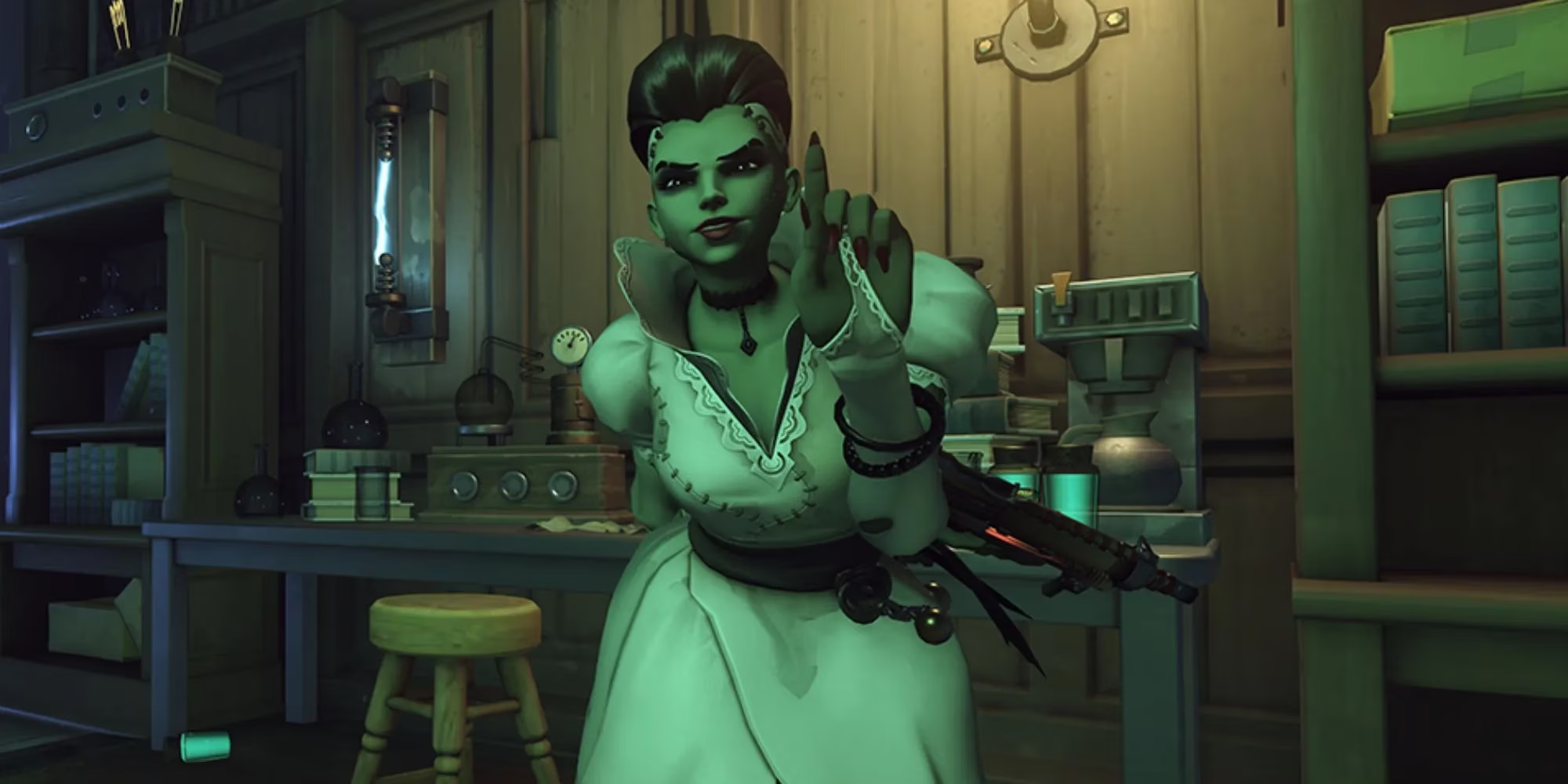
I’m not just whining for the sake of it. I’ve been a loyal support main since the OG Overwatch, and I’ve seen the evolution from loot boxes to battle passes to… whatever this is. Four years after launch, the monetization machine is still chugging along, and the community’s frustration has shifted from mild annoyance to cries of “bring back loot boxes!” Yes, you read that right. The same loot boxes that had governments labeling them as gambling are now being begged for like a lost puppy. Why? Because at least you could earn them by playing the game, and if you got a duplicate, you’d feel slightly disappointed instead of financially violated.
Take the yearly Halloween event, for example. In 2022, Kiriko’s debut spooky skin was locked behind a bundle that cost $26, and it was labeled as “29% off” right out of the gate. Fast-forward to 2026, and the tradition is alive and well. The new D.Va vampire skin? Only available in a “Mega Monster Bundle” for $30, marked down from an imaginary $45. Did anyone ever see it priced at $45? Of course not. That’s the trick — create a fake original price, slap a discount sticker on it, and watch FOMO do its magic. It’s the retail equivalent of a haunted house where the exit is locked until you buy a $20 glow stick.
I need to ask: how is this still happening? Back in the day, Reddit users like Nirxx pointed out that such practices — immediate discounts on “new” items and bundle exclusivity — were illegal in countries like Australia, Brazil, and the UK. And they weren’t wrong. Consumer protection laws in those regions say you can’t claim a product is on sale unless it’s been available at the regular price for a reasonable period. Yet here we are in 2026, with skin bundles still being sold under these dubious discounts, and not a single regulator seems to have knocked on Blizzard’s door with a strongly worded letter. Or maybe they have, and the result was a small fine that gets pocket-changed out of the game’s billion-dollar revenue. Either way, the practice continues, and players are left feeling like we’re stuck in a time loop.
Let’s break down the absurdity with a quick table of what my friend group has actually considered buying:
| Skin / Bundle | Price (in USD) | Our Emotional State |
|---|---|---|
| Vampire D.Va Mega Bundle (2026) | $30 | Existential dread |
| Cyberpunk Widowmaker (2025) | $20 individual | Resignation |
| Anniversary “Sale” Bundle (2024) | $65 for 5 skins | Laughter followed by tears |
| Legendary Skin in 2016 Loot Box | Free after 10 matches | Pure, innocent joy |
That last row isn’t nostalgia goggles — it’s a real comparison that stings. Back then, you could play for a few hours and earn enough boxes to feel rewarded. Now? You either pay up or grind the battle pass for a single free skin that looks like a recolor your grandma designed. The battle pass itself is a whole other trick-or-treat bag: 80 tiers of mostly filler, and the one good skin is at the end, guarded by a Play-Doh-like statue of a challenge requirement.
And the bundles! Oh, the bundles. The article linked earlier mentioned that in some countries, companies must ensure every item in a bundle is also sold individually. But from what I’ve seen in the 2026 shop, the hot new skins are still bundle-exclusive, forcing you to buy sprays, charms, and voice lines you’ll never use. It’s like walking into a candy store, asking for one lollipop, and being told you must also purchase a year’s supply of saltwater taffy. Is that really a fair trade? I doubt the Australian Competition and Consumer Commission would smile upon it.
So, what’s a cash-strapped gamer to do? Some folks have actually filed complaints with their local authorities, hoping to trigger an investigation. In the UK, a few users reported Blizzard to the Advertising Standards Authority, but the result was a quiet “we’ll look into it” that disappeared faster than my rank after a losing streak. Meanwhile, the in-game prices keep climbing. Maybe the real horror isn’t the Halloween event at all — it’s the realization that the “optional” cosmetics have become a core part of the experience, and we’re all a little bit hooked.
I’m not saying I’ve never bought a skin. I’m guilty. I once spent $20 on a Mercy skin because it reminded me of a character from an anime I love. But I did it feeling like I was being emotionally manipulated, and that’s the part that leaves a stain. The discount timer ticking down, the bundle “value” flashing in bright colors — it’s all designed to make you swipe before you think. And in 2026, with the cost of living being what it is, dropping the price of a decent meal on a digital outfit feels extra painful.
What would I prefer? A system where you can earn most skins through gameplay, with optional direct purchases that respect your wallet. Some indie games do it. Why can’t a AAA behemoth? Until then, I’ll keep hoping that the next Halloween event brings back the terror of Dr. Junkenstein’s creations rather than the terror of my bank statement. And to those brave souls still reporting shady bundles to consumer watchdogs — you have my support, and maybe a pumpkin emoji for your battle.net profile. 🎃
In the end, Overwatch 2 remains a game I love to play and hate to pay. The gunplay is crisp, the heroes are charming, but the shop is a ghost that won’t stop rattling its chains. Is it illegal? In many places, likely yes. Will anything change? If the past four years are any indication, we might need more than a stake through the heart of a vampire skin to fix this.
Leave a Comment