
Mirrorwatch: A Bittersweet Glimpse into Overwatch 2's Lost PvE Dreams
Overwatch 2's Mirrorwatch event masterfully delivered a thrilling 'what if' scenario, showcasing a dynamic PvP experience with hero-altering abilities that brilliantly highlighted the unfulfilled potential of the canceled PvE Hero Mode and its promised Talent system.
As I log into Overwatch 2 in 2026, the rhythm of seasons and events continues to define the game's heartbeat. Blizzard's strategy of keeping gameplay fresh through frequent, often daring, limited-time modes has become the franchise's lifeblood. I remember when the Mirrorwatch event first launched back in April 2024. It wasn't just another event; it felt like a seismic shift, a playful yet profound 'what if' scenario that shook the very foundations of the world we thought we knew. Heroes became villains, villains became heroes, and with those swapped allegiances came a cascade of wild, wonderful, and brand-new abilities that completely transformed how we played. Jumping into a match as a damage-dealing Mercy, launching explosive projectiles instead of healing beams, was an experience that was equal parts exhilarating and strangely melancholic. It was fun, chaotic, and brilliantly designed, but for many of us long-time fans, it also served as a poignant, almost painful, reminder of a promised future that never arrived.
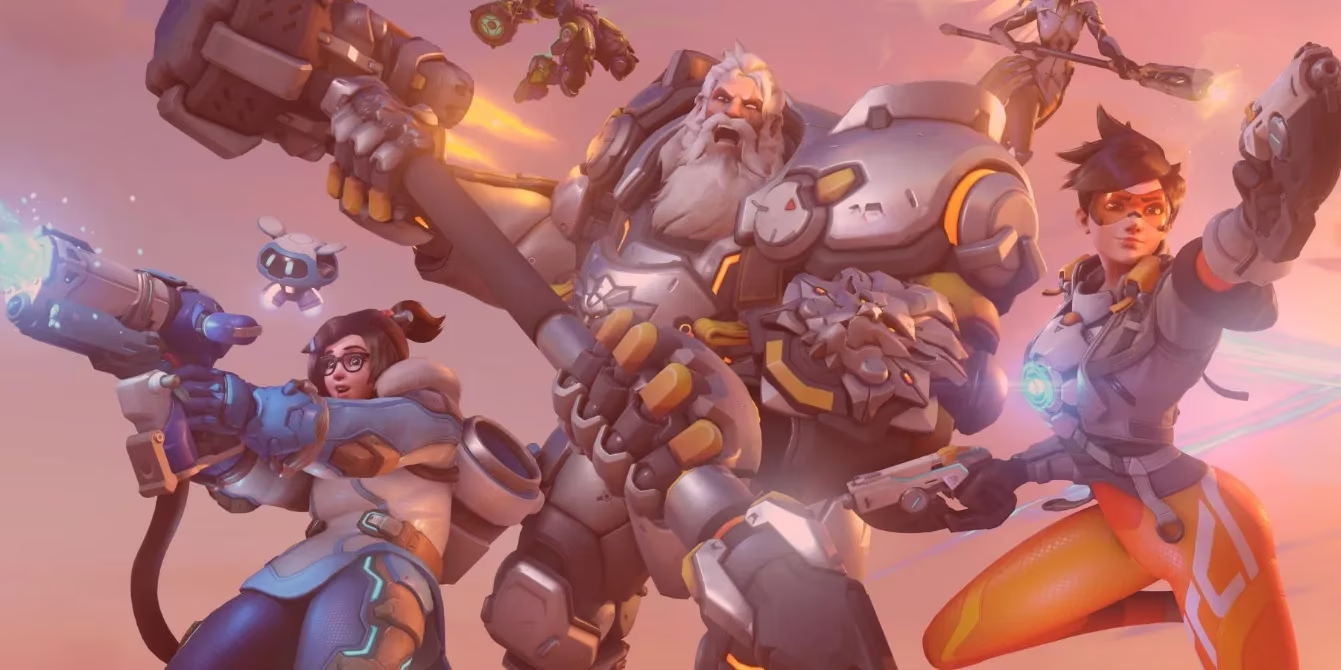
The launch of Overwatch 2 as a free-to-play sequel in 2022 came with grand promises. The biggest pull, for me and countless others, was the comprehensive PvE 'Hero Mode.' We were promised a deep, replayable campaign where we could level up our favorite heroes, unlocking unique skill trees that would grant them powers far beyond anything seen in the standard PvP arenas. Imagine a Tracer with time-manipulation mines, or a Reinhardt with elemental-infused hammer strikes! The original vision was staggering: each of the dozens of heroes was slated to have three unique skill trees, boasting between 40 to 50 distinct skills per character. These weren't just simple stat boosts; they were entirely new abilities designed to make PvE a rich, progression-based playground. The 'Talent' system was the cornerstone of this dream, a system that would have allowed for near-infinite build variety and hero mastery.
Then, the dream was dialed back. 😔 The ambitious Hero Mode was scaled down into a handful of standalone PvE Story Missions. As of today, we only have three: Resistance, Liberation, and Ironclad. While these missions are fun cinematic experiences, they lack the deep progression and customization that was originally advertised. The Talent system, the skill trees, the entire RPG-lite progression—it was all scrapped. For years, that loss hung in the air, a 'what could have been' that colored every new update. We got new heroes, new maps, but the ghost of that original PvE promise lingered.
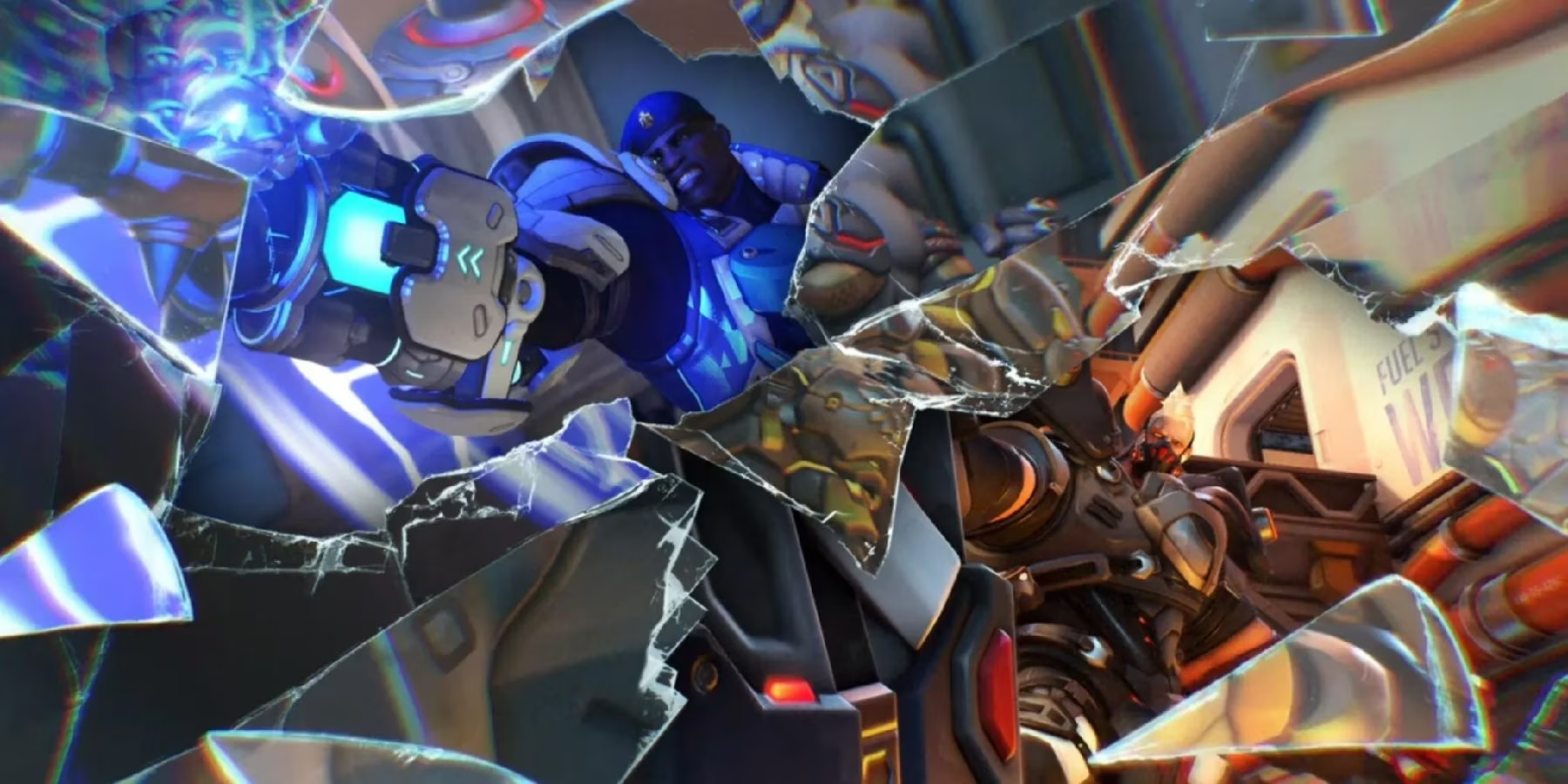
This is why playing Mirrorwatch hit so differently. The 12 heroes available in the mode weren't just wearing different-colored costumes; they were fundamentally altered. Here’s a quick look at some of the mind-bending changes we experienced:
-
Mercy: Swapped her Caduceus Staff for a blaster that fired explosive rounds. Valkyrie became an offensive aerial assault.
-
Reinhardt: His Barrier Field could be thrown like a projectile, and Earthshatter created a persistent damage zone.
-
Tracer: Her Pulse Bomb attached to allies to grant them a powerful overshield, turning her ultimate into a support tool.
-
Widowmaker: Her Infra-Sight highlighted enemies for her team, and her Venom Mine healed allies instead of poisoning foes.
Playing with these abilities, I couldn't shake the feeling that I was glimpsing artifacts from a lost development build. That explosive Mercy projectile? It felt exactly like the kind of unlockable skill that would have sat in a PvE talent tree. Reinhardt's throwable shield had the hallmark of a game-changing ability designed for fighting AI hordes, not other players. Mirrorwatch was more than a fun event; it was a museum exhibit for Overwatch 2's scrapped potential. It proved, beyond a shadow of a doubt, that the developers had already done significant work designing these transformative abilities. They had the ideas, the prototypes, the gameplay concepts—they just never found a permanent home for them in the live game's ecosystem.
The event's success, coupled with the playful (if ridiculous) hero changes from the April Fools event earlier that same year, sparked a persistent hope in the community. Could some of these ideas graduate from limited-time novelties to permanent fixtures? Perhaps as new abilities for future heroes, or even as part of a reworked, more modest PvE progression system? While Blizzard has remained focused on the seasonal PvP cycle, the legacy of Mirrorwatch demonstrates a clear player appetite for shaking up hero kits in dramatic ways. It showed that players are not just open to change but crave it, especially when it tells a new story or explores a hero's potential from a fresh angle.
As the Mirrorwatch event concluded on May 14, 2024, and we returned to the familiar rhythms of standard gameplay, that bittersweet feeling remained. The event was a roaring success in terms of engagement and fun, but it also cast a long shadow. It was the closest we ever got to experiencing the original vision for Overwatch 2's PvE. It was a brilliant, temporary window into a much more complex and customizable game. While the current Overwatch 2 in 2026 continues to thrive with new heroes like Venture and Space Ranger, and engaging seasonal narratives, I sometimes still think back to those few weeks of Mirrorwatch. It was a testament to the developers' creativity and a sad, beautiful echo of the ambitious sequel we were once promised—a reminder that sometimes, the most intriguing 'what ifs' are the ones we get to play, if only for a limited time.
Leave a Comment