
Overwatch 2's Bastion Rework: Finally Making the Most Hated Robot Less Annoying?
Blizzard's Bastion rework in Overwatch 2 promises to scrap his infamous stationary turret for real tactical depth.
Few characters in gaming history have inspired such a strange blend of rage and pity as Bastion. For brand-new players, he was the robotic buzzsaw that turned every payload map into a shooting gallery. For battle-hardened veterans, he was the teammate who parked in a corner, held down fire, and offered about as much tactical depth as a stubborn garden sprinkler. So when Blizzard dropped the news during an Overwatch 2 PvP developer livestream that Bastion would be rebuilt “from the ground up,” the internet exhaled so hard it nearly buffeted the moon.
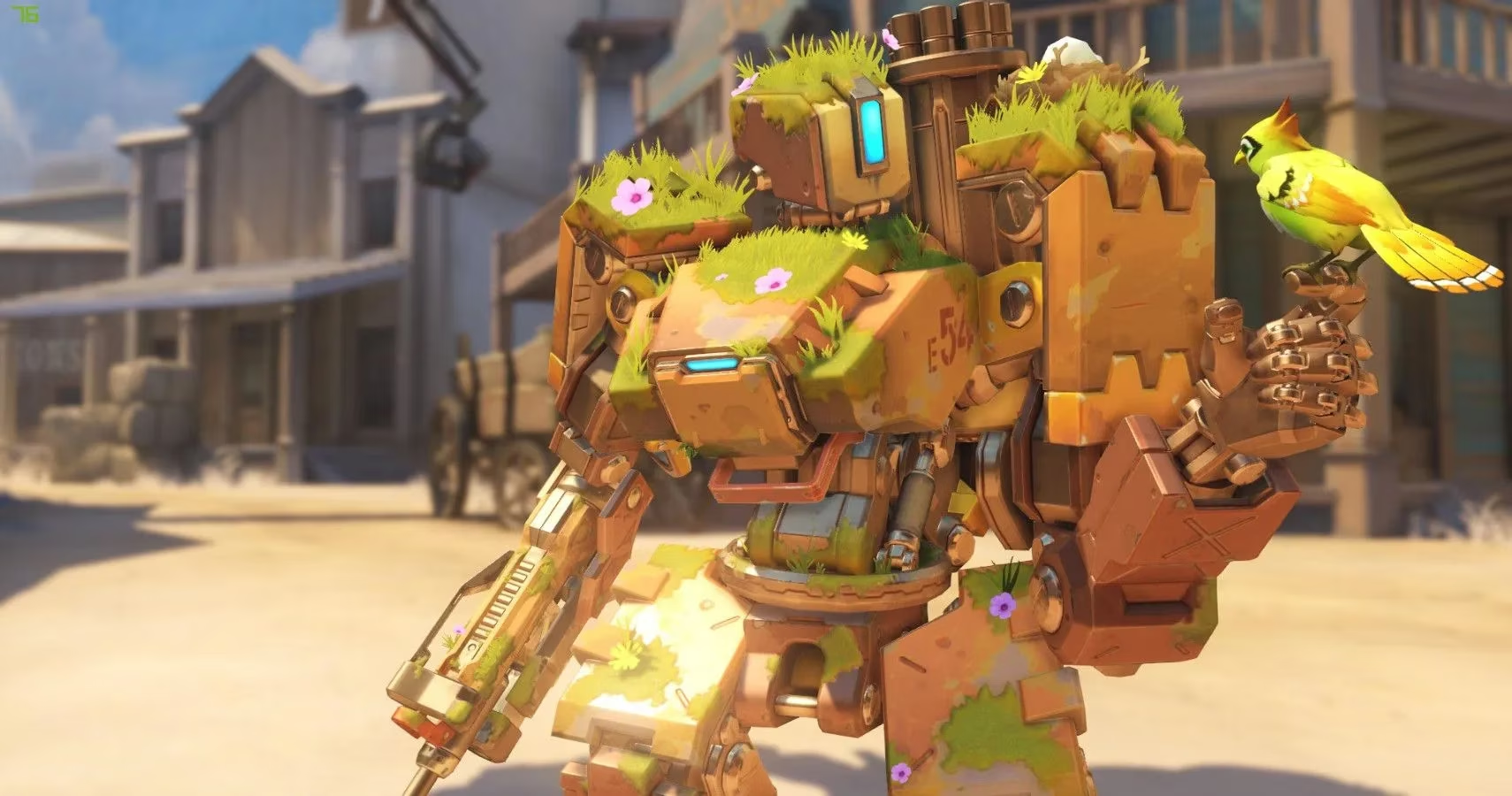
The announcement was not just a casual tweak. Blizzard stated that heroes like Bastion were being “reviewed and reworked from the ground up,” which promised major changes to how the hero actually plays. That phrase alone set off all kinds of speculation. Would the lovable-but-infuriating omnic finally stop being a stationary bullet hose? Could he gain actual mobility, meaningful cooldowns, or maybe even a personality beyond beep-boop-and-delete?
Why Everyone Wanted a Bastion Rework
Ask any Overwatch player about Bastion and you will get one of two reactions: a thousand-yard stare or a detailed rant about shield health bars. The core issue was never that Bastion was weak or strong in some balanced way. The problem was that he essentially had one trick. He sat down, transformed into a turret, and waited for the enemy team to walk into his line of fire.
For fresh accounts, this felt absurdly unfair. A well-placed Bastion behind a barrier could erase an entire push before anyone understood what happened. New players called him overpowered and cheap, and it was hard to blame them. For longtime fans, though, Bastion was often seen as a waste of a character slot. Very few players actually chose to main him, because his gameplay loop was shallow. Once opponents learned to flank, focus fire, or simply avoid his sightlines, Bastion became a generous donation of ultimate charge to the other team.
That tension created one of Overwatch’s strangest design problems. How do you keep a hero terrifying for newcomers but also satisfying for high-level play? The apparent answer, according to Blizzard, was to tear the whole blueprint apart and start again.
What “From the Ground Up” Might Actually Mean
Blizzard’s livestream did not hand over a full ability kit, but it did promise a “sneak peek” later in the year. That did not stop the community from theorizing. The most requested change involved Bastion’s iconic stationary turret form. Some fans wondered if it would be removed entirely. Others hoped it would become a shorter, cooldown-based transform that rewarded smart timing instead of lazy parking.
The phrase “rebalancing and adjustments across the board” also suggested that this was not an isolated number tweak. Blizzard appeared to be using Bastion as the poster child for big, structural hero changes. He was by far the most requested hero for a rework, so making him the first example made sense.
Could Bastion still feel like Bastion without his stationary turret? That is the kind of existential question developers probably debated over several cups of coffee and at least one broken keyboard.
More Than Just a Robot Problem
While Bastion stole the spotlight, the livestream revealed plenty of other Overwatch 2 changes that deserved attention. Tanks were getting adjustments to their special moves, and the game’s competitive format was shrinking to 5v5, removing one tank from each side. Mei’s primary fire also got a notable update: her blaster would still deal damage and slow enemies, but she would no longer freeze them solid. For anyone who ever spent three seconds trapped in ice while Mei cheerfully aimed an icicle at their forehead, this sounded like progress.
Those changes pointed toward a faster, brawlier sequel. A 5v5 format meant fewer shields to hide behind, more open duels, and less room for a stationary turret to dominate. In that context, rebuilding Bastion was not just a favor to frustrated players. It was practically necessary.
Can the Omnic Find Redemption?
By 2026, looking back at that initial Overwatch 2 announcement feels a bit like scrolling through old text messages from a dramatic friend. The promises were big, the emotions were intense, and everyone wondered whether the follow-through would match the hype. Bastion’s ground-up rework became one of the clearest examples of Blizzard treating a controversial hero as a real design challenge rather than a joke pick.
Will the rework finally make Bastion viable without making everyone uninstall? Will new players still call him cheap? Will veterans finally stop sighing when someone locks in the robot on defense? Those questions are best answered on the battlefield, where a transforming omnic may now have more options than sitting in a corner and holding the trigger.
One thing feels certain: the era of the unmoving Bastion fortress might finally be getting an update, and for most Overwatch players, that news deserves a hearty round of applause—provided nobody is standing in his line of fire.
Leave a Comment