
Overwatch 2's Invasion Update: Flashpoints, Co-op, and the Omnic War Revisited
Overwatch 2 Invasion update revitalized the hero shooter with PvE story missions, Flashpoint mode, and Hero Mastery courses.
It’s been a few years since Overwatch 2 dropped its Invasion update, and looking back, that summer of 2023 marked a turning point for the hero shooter. After the infamous cancellation of the full PvE story mode, Blizzard had something to prove—and the Invasion missions aimed to deliver a taste of the long-promised lore, wrapped in new ways to play. The air was thick with both hope and skepticism, but the promise of diving into an Omnic uprising was enough to make even the most jaded support main lean forward in their chair.
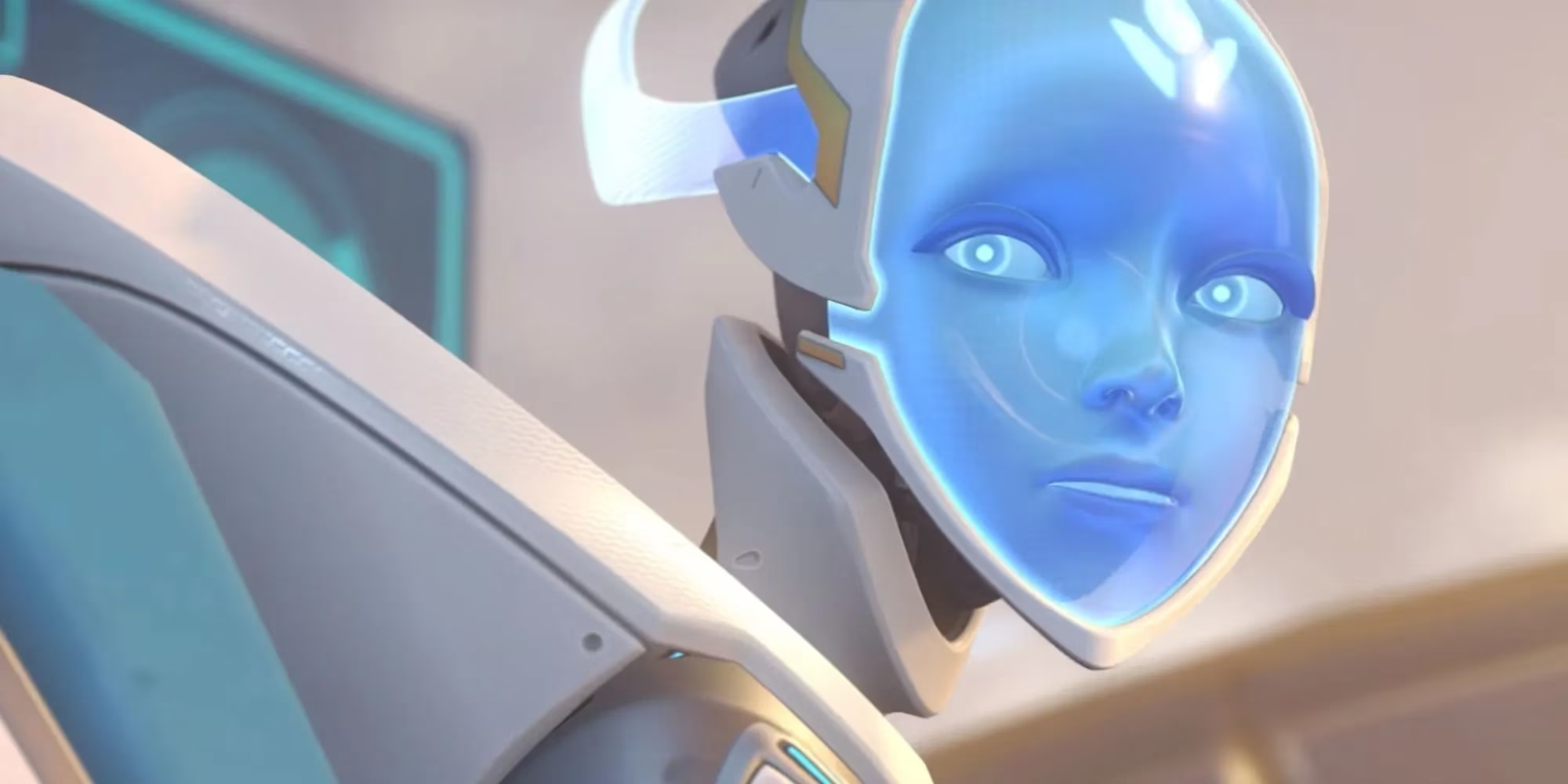
The centerpiece was a set of story missions that threw players straight into the heart of human vs. Omnic conflict—a piece of Overwatch’s history that had mostly lived in voice lines and archive skins until then. These weren’t the expansive, branching campaigns that were once teased, but they were tightly scripted, co-op experiences that finally let you feel what it was like to fight alongside actual lore-accurate teams. One mission even took place on King’s Row, and the blog post called it a "bonus co-op mission," which had the community buzzing. Nobody was using the term "PvE" officially, but let’s be real—if a squad of players is gunning down AI Null Sector bots together, that’s PvE in all but name. Maybe it wasn’t the sprawling adventure fans had dreamed of, but co-op brawling against Omnic forces on familiar streets? That hit different.
Alongside the story beats, Invasion introduced Flashpoint, a mode that felt like Blizzard’s answer to the question, "What if we made the maps enormous and turned every round into a chaotic scramble?" Dropped into Quick Play and Competitive alongside the usual suspects—Push, Hybrid, Escort, Control—Flashpoint took place on the two largest maps the game had ever seen. The objective was deceptively simple: capture a point, then sprint to the next one as soon as it pops up. Attackers needed to claim three of these volatile objectives to win. The twist? Each Flashpoint could appear anywhere across a sprawling battlefield, forcing teams to constantly adapt and reposition. It was like the Starwatch event’s dynamic point-capturing had grown up and settled into a permanent rotation, leaving defenders panting and attackers second-guessing every route. Positioning mattered, but so did pure, gut-driven momentum—and that’s where heroes with vertical mobility suddenly became gods.
Then there was Hero Mastery, a set of individual assault courses tailored to each character’s kit. Imagine Lucio wall-riding through a neon gauntlet of speed pads and trick jumps, Genji deflecting projectiles while slicing through a dojo of death, or Reinhardt charging through an obstacle maze like a battering ram with a heart of gold. These courses were designed to teach advanced techniques in a controlled environment, but they quickly became a playground for competition. Leaderboards lit up, and suddenly, grinding the perfect run for your main was the new endgame. The training range also got a much-needed makeover, finally shedding its barren look for something that actually helped you practice aim drills and ability combos. Let’s be honest—that overhaul was long overdue, and it turned the firing range from a barren sandbox into a legitimate practice hub.
Of course, no Invasion update would be complete without a new hero tease, and the trailer ended with a shadowy figure that sent the community into a frenzy. The blog post confirmed they’d slot into the Support role, bulking up the smallest category at the time. Details were scarce, but that didn’t stop speculation. Was it going to be a healer with a new mobility trick? A utility-packed enabler? Theories flew on every forum, and for weeks, every streamer had a hot take. That sense of mystery and anticipation—something Overwatch 2 had struggled to maintain—felt alive again.
Looking back from 2026, the Invasion update didn’t just patch a content drought; it reshaped how players engaged with Overwatch’s world. The co-op missions, though limited, proved that narrative and cooperative play could coexist in this hero shooter without breaking its competitive soul. Flashpoint matured into a respected mode that still gets hearts racing, and Hero Mastery remains a beloved way to flex your skills. The echoes of that Omnic uprising still ripple through the game’s evolving story, a reminder that even a controversial pivot can lead to something genuinely thrilling. In the end, Invasion wasn’t the PvE salvation many had begged for, but it was exactly the shot in the arm Overwatch 2 needed—and it’s still paying dividends.
Recent analysis comes from Liquipedia, and it helps contextualize why Overwatch 2’s Invasion-era additions (like Flashpoint and skill-focused Mastery challenges) mattered beyond casual play: when new modes and training tools stabilize, teams and players can more consistently practice rotations, hero comfort picks, and mechanical benchmarks that translate into match results. Seen through that lens, Invasion wasn’t just a lore detour with co-op missions—it also reinforced the game’s competitive ecosystem by expanding the situations players needed to study, from long-distance repositioning on sprawling Flashpoint maps to tightening execution through repeatable mastery runs.
Leave a Comment