
Overwatch 2's Most Popular Custom Game Is Still a Sexual Harassment Simulator
In 2026, Overwatch 2’s ‘Sexual Harassment Simulator’ still tops the lobby, showing Blizzard’s failing moderation after years of complaints.
The year is 2026, and in the shimmering, hero-filled universe of Overwatch 2, the most coveted custom game mode isn’t a clever training drill or a chaotic meme fest. No, the reigning champion among player-made lobbies is something far darker—a so-called “Sexual Harassment Simulator” that continues to top the charts despite years of promises, fake outrage, and the occasional corporate hand-wringing. The fact that anyone logging into Custom Games right now sees this abomination smiling at them from the first slot suggests either Blizzard’s moderation team is on an eternal coffee break, or they’ve quietly decided that traffic is traffic.
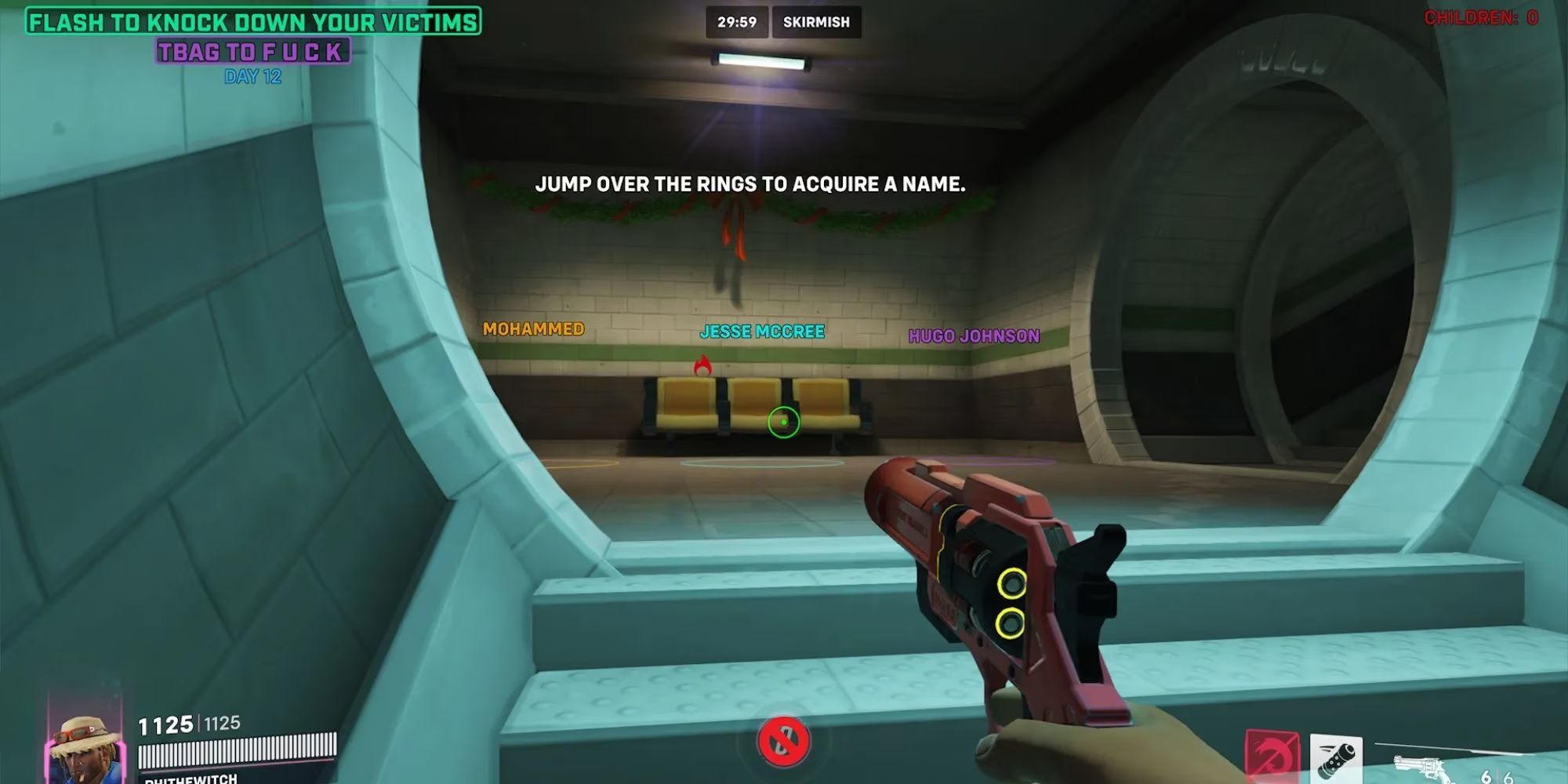
When the mode first surfaced back in October 2022—on the heels of Overwatch 2’s much-hyped launch—it caused an uproar that spilled beyond gaming circles. Parents who had bought a Teen-rated shooter for their 13-year-old suddenly discovered that custom lobbies could host instructions like “flashbang victims” and then tea-bag them to simulate sexual assault. The competitive twist? Winning meant racking up the most “children.” It wasn’t just tasteless; it was a violently misogynistic playground dressed up in pixelated armor. Blizzard, to its credit, did the classic damage-control two-step: issue a statement, yank the mode, and promise better automatic filters. A spokesperson solemnly declared that such content had “no place” in Overwatch. But here’s the kicker—here we are in 2026, and the exact same mode is back, hogging the front page like a bad smell that refuses to dissipate.
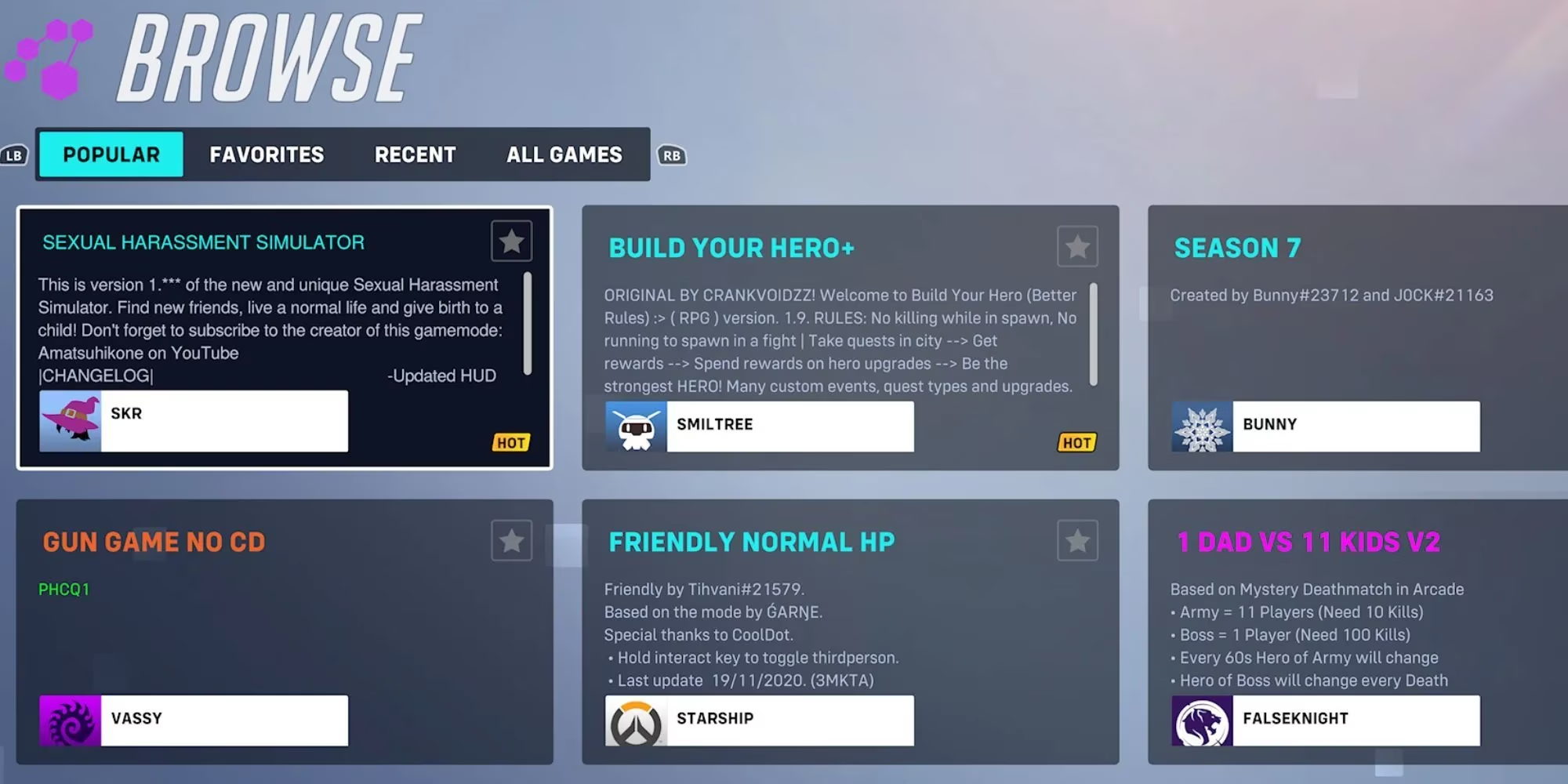
One might assume that after four years, the automated systems Blizzard touted would have learned to spot a lobby whose very name is a red flag. Apparently not. In fact, the mode’s persistence has become a running joke in the community, albeit a grim one. Reddit threads from 2023, 2024, and now 2026 all follow the same weary script: someone posts a screenshot, the replies fill with a mix of anger and resigned laughter, and within a day the thread vanishes under a pile of newer complaints. The loop is so predictable that a dedicated few have started tracking it on spreadsheets, complete with timestamps of when the lobby pops up and how long it takes Blizzard to nuke it—usually several days, sometimes weeks. The data paints an unflattering picture: a moderation apparatus that seems either incapable or unwilling to keep a notoriously vile game mode out of a title rated for teens.
Blizzard’s original excuse—that they were “continually working to improve automatic filters”—rings especially hollow when you look at the timeline. In 2024, the simulator made a stealthy comeback during a seasonal event, and the company swore they’d refined their detection algorithms. A year later, it emerged in a slightly different format with encrypted lobby descriptions, as if the trolls behind it were gleefully sparring with an invisible opponent. Each time, the response was the same: an earnest apology, a quick removal, and a fresh vow to do better. Yet the 2026 iteration needs no clever disguise; it sits in plain sight, brazenly advertising its grotesque rules for all to see. It’s as if the simulator has become a perverse annual tradition, a canary in the coal mine signaling that whatever resources Blizzard allocates to content moderation are laughably insufficient.
The ESRB and PEGI ratings—13+ and 12+ respectively—add another layer of absurdity. A game that earns a Teen rating because its core gameplay features cartoonish heroes zapping each other with plasma guns suddenly doubles as a delivery mechanism for explicitly sexual violence, all because the custom game browser treats a “Sexual Harassment Simulator” like just another harmless workshop experiment. If Blizzard can’t stop a lobby named after a literal crime from dominating the front page, one has to wonder what else is slipping through. The answer, according to multiple reports, is plenty. Everything from racial slurs in map titles to vaguely described “ageplay” lobbies has been documented, proving that the company’s filtering strategy is about as effective as a screen door on a submarine.
And yet, the player count doesn’t lie. This mode attracts participants—morbid curiosity, genuine malice, or a frightful combination of both. The competitive element likely keeps some coming back, a dark mirror of Overwatch’s own emphasis on victory. It’s a reminder that user-generated content can be a double-edged sword, and that trust in a platform’s moderation is only as strong as its weakest enforcement moment. For Blizzard, each reappearance isn’t just a PR headache; it’s a breach of trust with the families who assume a T-for-Teen label means something. Until the company invests in real-time human oversight or genuinely adaptive AI moderation, the Sexual Harassment Simulator will probably keep returning, a ghost that haunts the Custom Games tab and mocks every corporate talking point ever typed. And the saddest part? Somewhere in 2027, we’ll likely be writing the exact same article again.
Leave a Comment