
Overwatch 2 Season 10 in Retrospect: Venture, Clash, Mythic Prisms, and Competitive Reform
Overwatch 2 Season 10 introduced Venture, Mirrorwatch, Clash, and Mythic Prisms, reshaping rewards, queues, and matchmaking.
When Overwatch 2 Season 10 arrived in April 2024, it landed like a tectonic shift rather than a routine content drop. For players reviewing the game’s evolution in 2026, the season remains a useful landmark: it introduced Venture, opened a limited-time mode called Mirrorwatch, tested Clash, reworked Mythic acquisition through Mythic Prisms, and reshaped competitive and social systems. The update did not simply add a hero; it adjusted the rhythms of reward, queue discipline, and matchmaking.
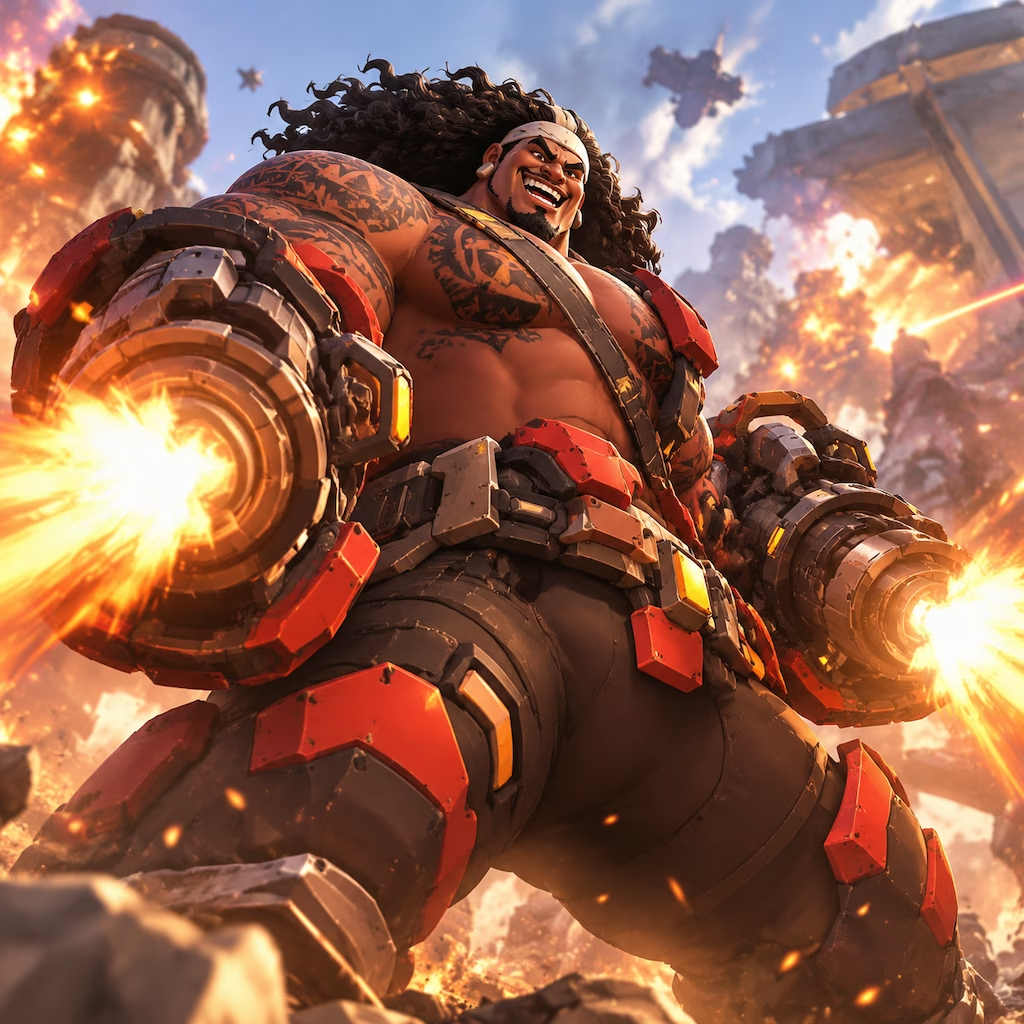
🪨 Venture: The Archaeologist Who Rewrote the Damage Queue
Venture joined the roster as a spirited archaeologist who channels a passion for history into daring heroism. The hero arrived free to all players, alongside the broader shift toward accessible hero unlocks, and was immediately available in Competitive Play. That decision was notable at the time because new heroes had often been gated behind Battle Pass progress or held back from competitive queues. Season 10 treated Venture as ready for the deep end from day one.
The kit revolves around a massive drill and seismic abilities. Burrow lets Venture move underground, Drill Dash provides mobility and impact, Clobber delivers close-range pressure, and Tectonic Shock anchors the ultimate. The balance changes in Season 10 redistributed damage so that positioning and target tracking mattered more. Drill Dash impact damage fell from 60 to 40 while its damage over time rose from 40 to 60. Clobber impact damage fell from 40 to 30 while its damage over time rose from 30 to 40. The intent was clear: maximum damage should come from staying connected to the right target, not from a single explosive collision.
Venture’s drill behaves less like a simple weapon and more like a conductor’s baton for a subterranean orchestra, cueing tremors, burrows, and sudden bursts of pressure. Bug fixes also smoothed the experience, including issues with Drill Dash activating underground, repeated impact damage, unintended knockback, ledge launches, Burrow emergence, third-person camera snaps, and missing UI prompts. For a 2026 audience, those fixes are a reminder that even a flashy launch hero needs a season of polish before the community can trust every interaction.
🧭 Mirrorwatch: An Alternate Universe With Reimagined Rules
Mirrorwatch ran from April 23 to May 13, 2024, and presented an alternate universe where the virtuous had crumbled into villainy and the wicked emerged as heroes. The limited-time mode included reimagined hero abilities and a redesigned Watchpoint Gibraltar now under Talon control. It was a playful inversion rather than a permanent ruleset, but it gave players a structured way to experience familiar heroes through a darker lens.
In retrospect, Mirrorwatch reflects a design idea that remains valuable in 2026: limited-time modes can test tone and ability twists without committing the core game to a permanent identity shift. The mode’s Talon-controlled Gibraltar was not just a palette swap; it was a narrative stage for role reversal.
⚔️ Clash: A Competitive Pendulum of Five Points
Clash arrived as an upcoming core mode and ran as a limited-time trial from April 16 to April 29, 2024. The mode is the ultimate tug-of-war. Teams battle over five capture points placed in a linear pattern on a mirrored map, and only one objective is active at a time. Matches begin with the center objective. Players capture by standing on the point and filling a progress bar, but capture progress stops while enemies contest.
Each captured objective awards one point and activates a new objective moving forward from the scoring team’s side. Objectives can be secured multiple times; if a team is pushed off and the other side captures, the next active point moves in the opposite direction. A team wins by capturing five objectives for a total score of five, or by taking the final objective on the opponents’ side regardless of score. Dynamic spawns and streamlined map routes expedite returns to the fight. Clash is a competitive pendulum, swinging momentum from one mirrored point to the next, with every capture adding weight to one side.
Hanaoka accompanied the season as a new map inspired by the visual themes of the beloved Assault map Hanamura. Players could explore shops and restaurants around town or follow the scent of sakura trees into the once-proud Shimada castle. The map gave Clash and the broader season a strong visual anchor.
🎁 Rewards: Coins, Battle Pass, and Mythic Prisms
Season 10 responded to player feedback by changing how rewards are earned. Overwatch Coins moved out of Weekly Challenges and into the Battle Pass, where players could earn up to 600 Overwatch Coins in the free track. Weekly Challenge milestones now reward additional Battle Pass XP, and the number of Weekly Challenges was reduced to simplify goals.
Mythic Prisms became the new currency for Mythic content. Available in the Premium Battle Pass, they can unlock and upgrade Mythic content. Completing the Premium Battle Pass yields 80 Mythic Prisms, enough to fully unlock one complete Mythic skin. In the Mythic Shop, a Mythic Hero Skin unlocks for 50 Prisms with a starting set of customizations, then levels up for 10 Prisms per level; 80 Prisms unlocks the skin and all available customizations. Mythic Prisms work like a locksmith’s ring in a mansion of cosmetics: the same small set of keys opens doors that once required separate purchases.
| Reward system | Season 10 detail | Player impact |
|---|---|---|
| Free Battle Pass coins | Up to 600 Overwatch Coins | Rewards shifted from Weekly Challenges to Battle Pass progression |
| Weekly Challenges | Fewer challenges; milestones grant extra BP XP | Simpler goals and clearer XP path |
| Mythic Prisms | 80 from completed Premium Battle Pass | Enough for one fully unlocked Mythic skin |
| Mythic Shop | 50 Prisms to unlock; 10 per level; 80 for full | Customization became modular |
📊 Competitive and Social Systems
Season 10 also tightened the social and competitive scaffolding. Players actioned for disruptive behavior and reduced to Endorsement Level 0 could not use text or voice chat until returning to Level 1. The Hide My Name option in Streamer Protect was expanded so that a random anonymized BattleTag displays to all players in a match, not only to the player with the setting enabled. New settings allowed hiding names from friends and group members, with Hide My Name From Friends taking priority when group members are also friends.
Leaver penalties gained new thresholds for Unranked play:
| Leaving threshold in 20 games | Suspension |
|---|---|
| 2 games | 5 minutes |
| 10 or more games | 48 hours |
Leaving 10 games in Competitive Play now results in a season ban regardless of games completed, and completed Competitive games count toward the 20-game Unranked window. Competitive Role Queue end-of-season titles now include the role, such as Champion Tank, Champion Support, Champion Damage, and Open Queue Champion. Role Rank Cards display the associated title, open Match History for the selected role, and expose map, mode, heroes, date, score, and result.
Grouping restrictions were overhauled. All previous Competitive grouping restrictions were removed, and groups are now classified as Narrow or Wide. Bronze through Diamond players must be within five divisions for a Narrow group; Master players within three; Grandmaster and Champion cannot be in Narrow groups. Narrow groups match against other Narrow groups or solo players. Wide groups of four may not queue, and wider groups face longer queues, lower match quality, and reduced rank progress changes. New modifiers include Wide, Demotion, and Demotion Protection, with Victory and Defeat labels added below the Rank Progress bar.
🛠️ Hero Tuning and Bug Fixes
The patch also touched several heroes. Doomfist’s Rocket Punch received a quality-of-life improvement that streamlined the transition between an empowered punch and another ability. Reinhardt’s Earthshatter knockdown duration increased from 2.75 to 3 seconds, and Shockwave range increased from 20 to 25 meters. Wrecking Ball gained grapple retraction by holding jump, a one-second cooldown if he never reaches ramming speed, Adaptive Shield redistribution up to 300 overhealth with a 75 per-person cap, and enemy and ally detection increased from 10 to 13 meters. Sombra’s Virus total damage over time decreased from 100 to 90. Illari’s Solar Rifle primary recovery increased from 0.2 to 0.25 seconds, while secondary fire healing per second increased from 105 to 115. Tracer, Lúcio, Lifeweaver, Moira, Junker Queen, and Sigma also appeared in the tuning notes, with adjustments aimed at downtime, precision, and support utility.
Bug fixes covered general systems, maps, and heroes. Wall Climb could no longer allow infinite climbing, Top 500 effects were corrected, leaderboard duplicates were removed, and backfill taskbar notifications were fixed. Venture-specific fixes addressed underground Drill Dash activation, repeated impact damage, unintended knockback, ledge launches, Burrow emergence, camera snapping, and missing UI prompts.
🏆 Legacy in 2026
For a 2026 audience, Overwatch 2 Season 10 is best understood as a structural season. Venture gave the damage roster a drilling archaeologist with a distinct underground rhythm. Mirrorwatch proved that alternate-universe rules could be a compelling limited event. Clash introduced a mirrored tug-of-war that rewards map control and momentum. Mythic Prisms made high-end cosmetics more modular, while leaver penalties, endorsement restrictions, and grouping rules clarified what the game expected from its community. The season’s changes may have launched in 2024, but their design questions remain relevant: how free should heroes be, how should prestige be earned, and how can competitive matches protect the players who stay until the end?
Research highlighted by Eurogamer helps frame Season 10 as more than a hero patch, emphasizing how Venture’s immediate competitive availability, the experimental Clash trial, and the Mythic Prism overhaul collectively signaled Blizzard’s push toward more flexible progression and cleaner long-term system design in Overwatch 2.
Leave a Comment